
Introduction to Spaghetti Aglio e Olio
The beauty of simplicity in homemade meals
There's something magical about spaghetti aglio e olio that captures the essence of Italian cooking — simplicity. This dish transforms just a few basic ingredients into a flavorful meal that delights the senses. With a mere pound of spaghetti, garlic, olive oil, and a sprinkle of red pepper flakes, you can create a comforting dinner in under 30 minutes.
The beauty of this classic recipe lies in its technique. Slow toasting the garlic in olive oil allows its flavor to develop fully, creating a rich, aromatic base. If you've ever experienced either undercooked garlic or, worse, the bitterness of burnt cloves, you'll appreciate the importance of getting it just right.
But why stop at just good? Think of the vibrant parsley that adds not only color but also freshness to the dish, creating a delightful contrast with the warm, golden tones of the spaghetti. Plus, a generous sprinkle of Parmigiano-Reggiano takes it over the top. Whether you're entertaining friends or enjoying a quiet night in, spaghetti aglio e olio is a fantastic go-to meal that proves that sometimes, less is more. For more tips on making this recipe shine, check out articles from Savor the Flavour and Serious Eats.
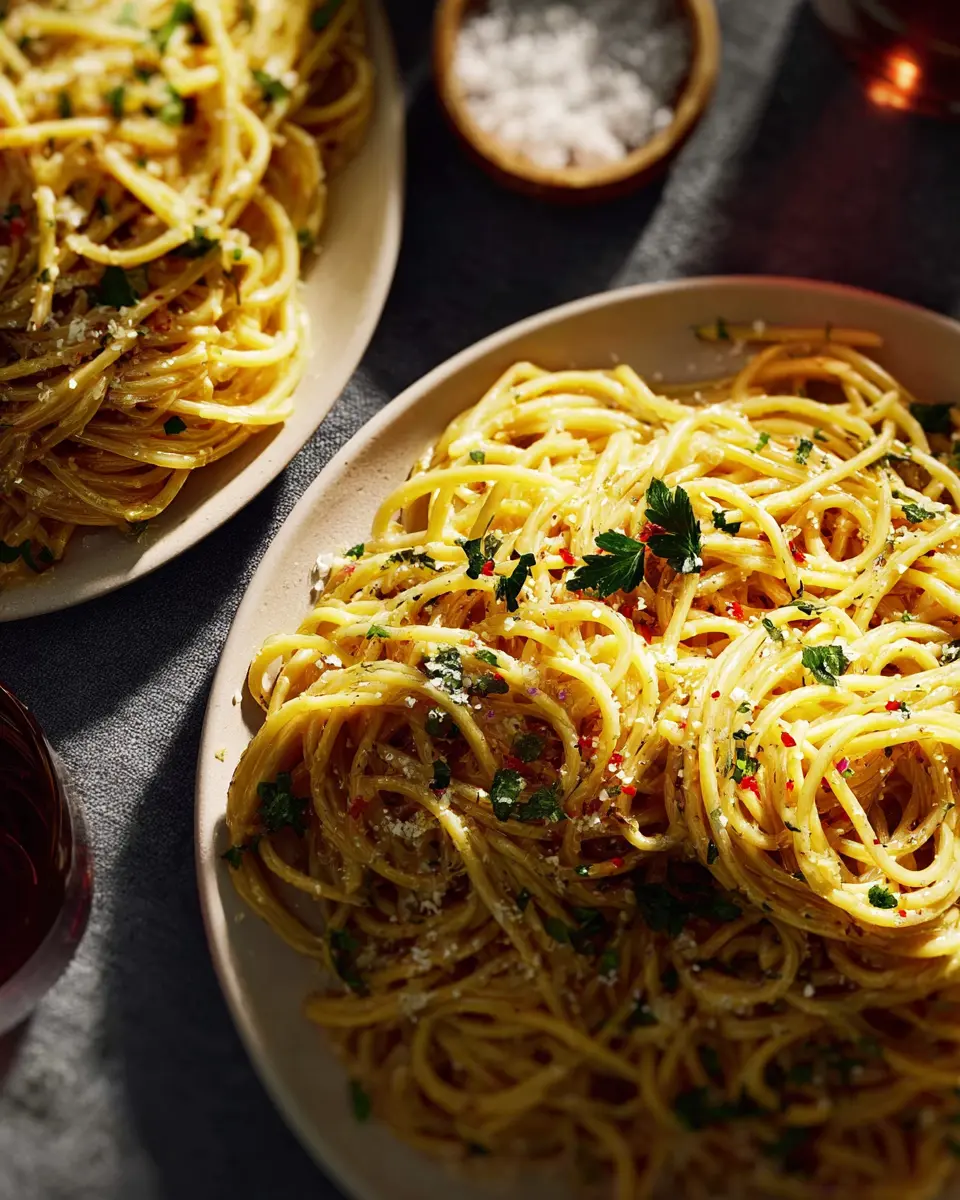
Ingredients for Spaghetti Aglio e Olio
Essential ingredients for the classic dish
To create a delectable spaghetti aglio e olio, you'll need a few core ingredients that truly define this classic dish:
- 1 pound uncooked spaghetti: Opt for high-quality durum wheat pasta for that perfect bite.
- ½ cup olive oil: This is crucial for flavor and richness; don’t settle for mediocre oil.
- 6 cloves garlic: Thinly sliced to achieve aromatic perfection.
- ¼ teaspoon red pepper flakes: Tailor the spice level to your taste.
- Fresh parsley: A pop of color and freshness—use about ¼ cup, chopped.
- Parmigiano-Reggiano cheese: Nothing beats the authentic flavor; use 1 cup, finely grated.
Quality matters: choosing the right olive oil and cheese
When it comes to your ingredients, quality is key. Select an extra virgin olive oil with rich flavor; it makes a world of difference. As for the cheese, go for authentic Parmigiano-Reggiano—its nutty notes perfectly complement the dish. The better the ingredients, the more satisfying your spaghetti aglio e olio will be!
For more tips on selecting the best olive oil, check out this guide.
Preparing Spaghetti Aglio e Olio
Creating a sensational spaghetti aglio e olio is not only an exercise in culinary skills but also an enjoyable experience that can transform an ordinary weeknight into a delightful feast. Let’s embark on this journey of preparing this classic Italian dish!
Gather your ingredients and tools
To kick things off, you'll want to make sure you have all your ingredients on hand. For a successful spaghetti aglio e olio, you'll need:
- 1 pound uncooked spaghetti
- ½ cup olive oil
- 6 cloves of garlic, thinly sliced
- ¼ teaspoon red pepper flakes (adjust to your taste)
- Salt and freshly ground black pepper
- ¼ cup chopped fresh Italian parsley
- 1 cup finely grated Parmigiano-Reggiano cheese
Along with these ingredients, gather your cooking tools, including a large pot for boiling the pasta, a skillet for toasting your garlic, and a good set of measuring cups. Having everything ready will make the process smoother and more enjoyable.
Cook the spaghetti to perfection
Bring a large pot of lightly salted water to a rolling boil. Cooking your spaghetti properly is crucial, so be sure to stir occasionally during the cooking process to prevent sticking. You’re aiming for al dente pasta, which typically takes about 10 to 12 minutes. Once cooked, drain the spaghetti in a colander and set aside, allowing some steam to escape while you prepare the garlic.
Toasting garlic: the art of timing
This step is where your spaghetti aglio e olio will truly shine. In a cold skillet, combine your olive oil and sliced garlic. Cooking over medium heat, this gentle method allows the garlic to gradually release its flavors. You want to keep an eye on it, especially as it starts to bubble. Once it reaches a golden brown, which should take about 15 minutes total, remove it from the heat. Overcooking can lead to bitterness, so stay vigilant!
Combining flavors with precision
Now that you have your beautifully toasted garlic, it’s time to mix it with the spaghetti. In your large pasta bowl, add the hot spaghetti and toss in the red pepper flakes, salt, and black pepper. Pour the warm olive oil and garlic mixture over the pasta, and then fold in the Italian parsley and half of the Parmigiano-Reggiano cheese. Toss everything together until each strand of spaghetti is evenly coated—this is where the magic happens!
Serving up your aglio e olio masterpiece
Presentation matters, even with a simple dish like spaghetti aglio e olio. Plate your pasta and top it generously with the remaining Parmigiano-Reggiano for that cheesy finish. A touch of fresh parsley can add a pop of color and vibrancy, making your dish not only delicious but also visually appealing.
Now, grab your fork and dig in! Each bite of your homemade spaghetti aglio e olio will take you straight to Italy, and you’ll be proud to have created such a classic dish with your own hands. Enjoy!
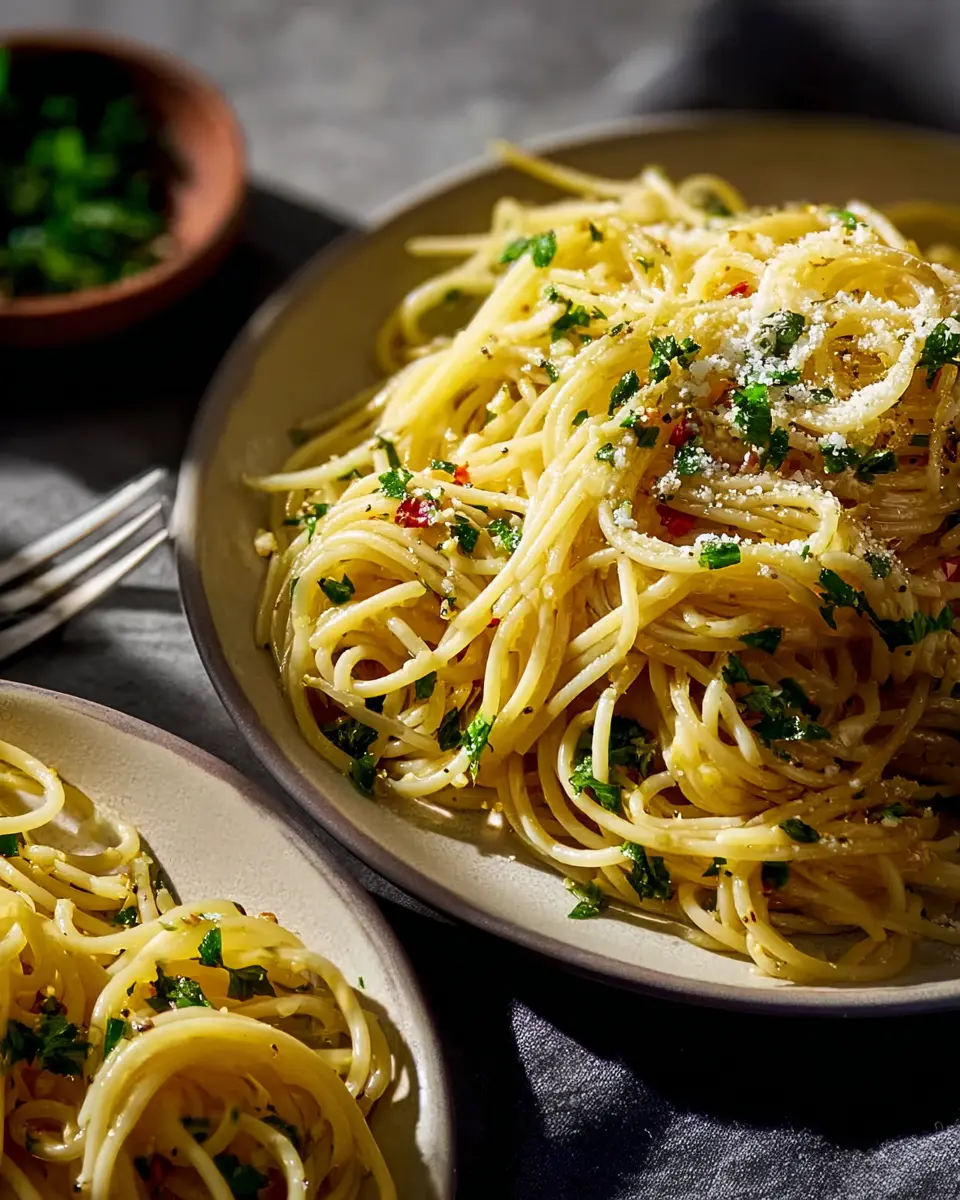
Variations on Spaghetti Aglio e Olio
Adding Protein: Grilled Chicken or Turkey Bacon
If you're looking to boost the protein in your spaghetti aglio e olio, consider adding grilled chicken or crispy turkey bacon. Simply grill the chicken until it's nicely charred, then slice it into strips and toss it in right before serving. For turkey bacon, cook it until crispy, crumble it over the top for a satisfying crunch, and enjoy the added depth of flavor.
Incorporating Veggies for Added Nutrition
Want to make your spaghetti aglio e olio a bit healthier? Toss in some sautéed veggies! Spinach, zucchini, or cherry tomatoes can elevate both the nutrition and appeal of the dish. Just sauté them lightly in the same olive oil before adding the garlic for a harmonious blend of flavors. If you’re interested in further health benefits, check out this article on the advantages of a veggie-rich diet.
These simple variations not only enhance the dish but also make it more filling and satisfying. Enjoy experimenting!
Cooking Tips and Notes for Spaghetti Aglio e Olio
The Importance of Cooking Garlic Slowly
When making spaghetti aglio e olio, the magic lies in how you treat the garlic. Cook it slowly over medium heat. This method releases its oil and transforms the flavor from sharp to sweet. Keep an eye on it—once it turns golden brown, you’re on the right track. If it cooks too fast, you risk a bitter taste that will overpower your dish. The result? A subtly aromatic oil infused with perfectly toasted garlic, elevating your pasta experience.
Alternatives to Traditional Ingredients
Feel free to get creative! If you don't have Parmigiano-Reggiano, consider using Pecorino Romano for a tangy twist. For those who prefer a bit less heat, swap out red pepper flakes for a milder option, like black pepper. You can even toss in cherry tomatoes or sundried tomatoes for an extra layer of flavor. Have fun and make this classic your own, while still enjoying the essence of the original recipe! For more variations, check out this guide on pasta sauces from BBC Good Food.
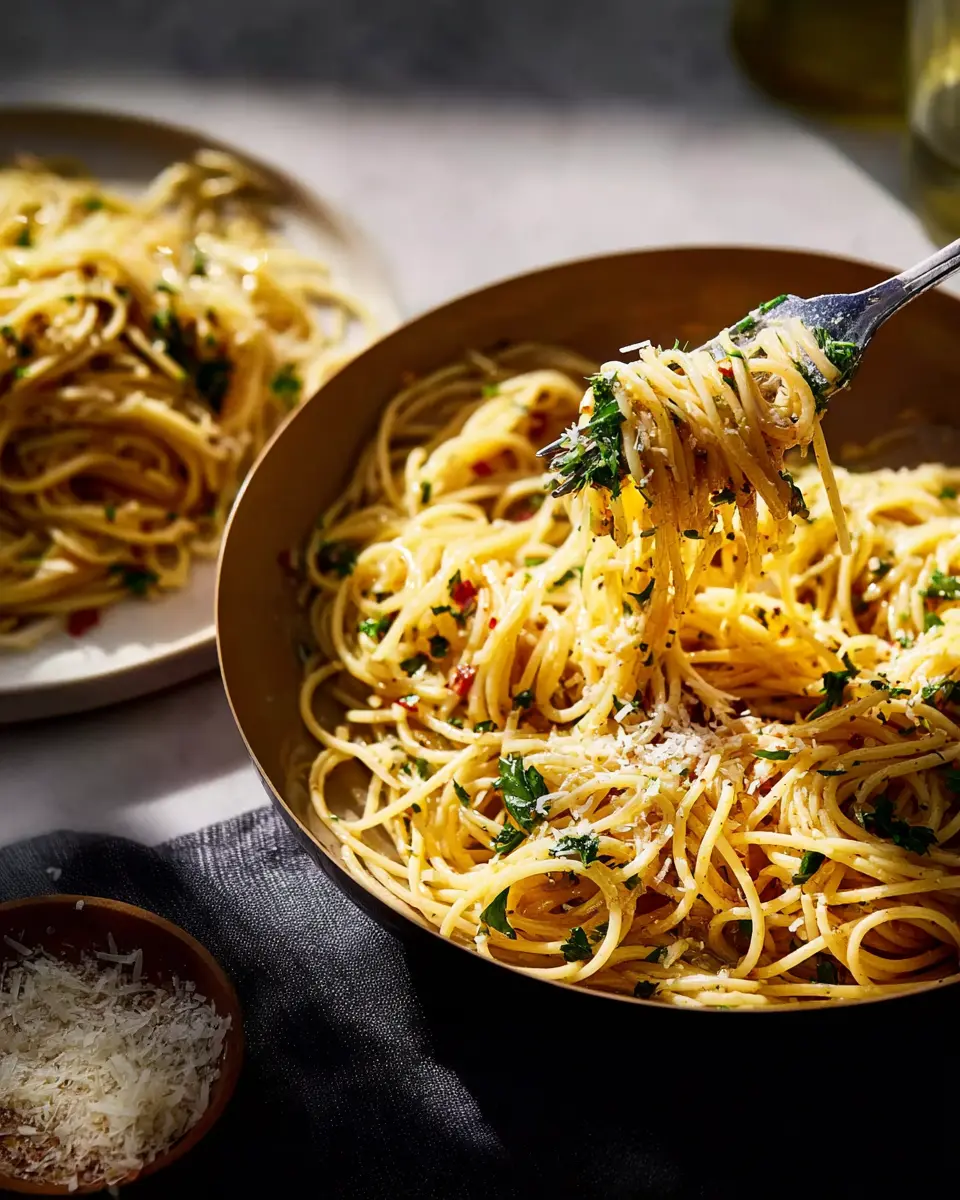
Serving suggestions for Spaghetti Aglio e Olio
Pairing with sides and salads
To elevate your spaghetti aglio e olio, consider pairing it with a light side salad or roasted vegetables. A classic Caesar or a refreshing arugula salad dressed with lemon and olive oil will complement the dish beautifully. Alternatively, serve it alongside garlic bread or even a simple caprese salad with fresh mozzarella and basil for an Italian flair.
Presentation tips for an elegant meal
For a beautiful presentation, twirl the spaghetti into nests on each plate using a fork or tongs. Garnish with extra parsley and a sprinkle of Parmigiano-Reggiano. You might also drizzle with a high-quality extra virgin olive oil to enhance the dish's look and flavor. Using vibrant, colorful plates can make your spaghetti aglio e olio shine even more.
For more tips on presentation, you might enjoy checking out this article on plating techniques.
Time Breakdown for Spaghetti Aglio e Olio
When you're craving a delicious plate of spaghetti aglio e olio, understanding the time involved can help streamline your cooking experience. Here’s a handy breakdown:
Preparation Time
Allow about 10 minutes to gather your ingredients and get everything prepped. This includes slicing the garlic and chopping the parsley.
Cooking Time
The cooking process will take approximately 15 minutes. It involves boiling the pasta and slowly toasting the garlic to perfection.
Total Time
In just 25 minutes, you can enjoy a classic spaghetti aglio e olio meal. Quick, easy, and utterly satisfying! If you’re curious about other Italian dishes that make use of similar techniques, check out sources like Italy Magazine for inspiration.
Cooking doesn’t have to be time-consuming to be delicious! What’s your go-to quick meal?
Nutritional Facts for Spaghetti Aglio e Olio
Calories and Key Nutrients
A serving of spaghetti aglio e olio contains approximately 755 calories. Key nutrients include 35g of total fat (with about 8g saturated fat), 23g protein, and 87g carbohydrates, making it a hearty meal. Additionally, this dish provides 4g of dietary fiber and essential vitamins and minerals.
Health Benefits of the Main Ingredients
The stars of this dish—garlic and olive oil—pack quite a nutritional punch.
- Olive Oil: Rich in healthy monounsaturated fats, it's known for its heart benefits. Studies suggest that it can help reduce inflammation and lower the risk of heart disease.
- Garlic: This flavorful ingredient is not only a taste booster but also has wellness properties, such as antioxidants and anti-inflammatory effects. Garlic may also aid in reducing blood pressure and cholesterol levels.
By enjoying spaghetti aglio e olio, you’re not only savoring a classic dish but also benefiting from the nutritional qualities of its primary ingredients. To learn more about the health benefits of garlic, check out Healthline.
FAQs about Spaghetti Aglio e Olio
Can I make this dish vegan?
Absolutely! Spaghetti Aglio e Olio is naturally vegetarian and can easily be adapted to be vegan. Simply omit the Parmigiano-Reggiano cheese or substitute it with a plant-based alternative. Nutritional yeast is a popular choice for its cheesy flavor and can make your dish both delicious and dairy-free.
What are some good alternatives to garlic?
If you want to switch things up, consider using shallots or leeks as a milder alternative. They add a subtle sweetness and depth to your dish. For those who need to avoid allium vegetables, you might try garlic-infused oil or even asafoetida for a unique flavor twist.
How do I make a larger batch?
Scaling up your spaghetti aglio e olio is simple! Just multiply the ingredients by the number of servings you need. Keep in mind that you may need a larger pot for cooking pasta and a wider skillet for the garlic. The method remains the same, ensuring that the flavors stay consistent, no matter the volume. Happy cooking!
Conclusion on Spaghetti Aglio e Olio
Embracing Homemade Goodness and Creativity
Spaghetti Aglio e Olio showcases the beauty of simplicity in cooking. With just a few ingredients, you can embrace the homemade goodness that celebrates flavor and creativity. Feel free to experiment with the recipe; add your twist with veggies or proteins. Enjoy your culinary journey!
Spaghetti Aglio e Olio
Equipment
- Large pot
- Skillet
- Pasta bowl
Ingredients
Pasta and Sauce
- 1 pound uncooked spaghetti
- 0.5 cup olive oil
- 6 cloves garlic, thinly sliced
- 0.25 teaspoon red pepper flakes or to taste
- salt and freshly ground black pepper to taste
- 0.25 cup chopped fresh Italian parsley
- 1 cup finely grated Parmigiano-Reggiano cheese
Instructions
Cooking Instructions
- Gather all ingredients.
- Bring a large pot of lightly salted water to a boil. Cook spaghetti in the boiling water, stirring occasionally until cooked through but firm to the bite, about 10 to 12 minutes. Drain and transfer to a pasta bowl.
- While the pasta is cooking, combine olive oil and garlic in a cold skillet.
- Cook over medium heat to slowly toast garlic, about 10 minutes. Reduce heat to medium-low when olive oil begins to bubble. Cook and stir until garlic is golden brown, about another 5 minutes. Remove from heat.
- Stir red pepper flakes, salt, and black pepper into pasta.
- Pour in hot olive oil and garlic, and sprinkle on Italian parsley and half of the Parmigiano-Reggiano cheese; toss until combined.
- Serve pasta topped with the remaining Parmigiano-Reggiano cheese.

Leave a Reply